
Back to articles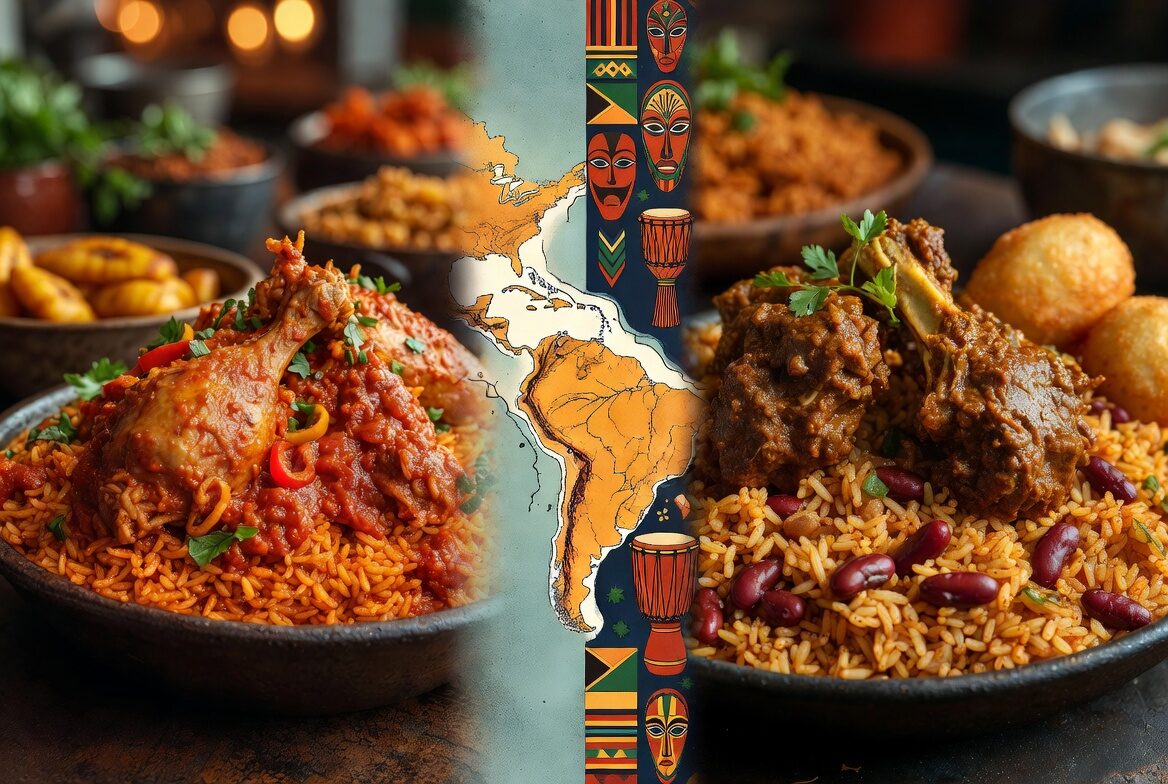
CultureMarch 2026· 7 min read
Caribbean vs West African Cuisine: The Shared Roots
How the transatlantic connection shaped two of the world's most vibrant food cultures - and what they still have in common today.
At first glance, a plate of Jamaican rice and peas and a bowl of Nigerian jollof look like different worlds. But trace the ingredients and techniques back far enough and the two cuisines share a deep, common root - one carried across the Atlantic over centuries.
**A shared pantry**
Scotch bonnet peppers, black-eyed peas, okra, callaloo (close cousin of West African leafy greens), yam, plantain and rice appear on both sides of the ocean. Many of these crops travelled with enslaved West Africans during the transatlantic slave trade, and the cooking knowledge travelled with them.
**Rice and one-pot cooking**
The West African tradition of seasoned, one-pot rice dishes - jollof, waakye, thieboudienne - echoes clearly in Caribbean rice and peas and pelau. The principle is the same: cook the rice in a deeply flavoured, well-seasoned liquid so every grain carries the taste.
**Heat and aromatics**
Both cuisines build flavour on a base of onion, pepper, thyme and fiery scotch bonnet. The Caribbean leans into allspice (pimento), nutmeg and cinnamon - a legacy of the spice trade - while West African cooking reaches for crayfish, locust beans (iru), uziza and calabash nutmeg for its signature umami depth.
**Frying and street food**
From Nigerian akara (bean fritters) to Caribbean saltfish fritters, from puff-puff to Jamaican festival, the love of fried, hand-held snacks is shared. Plantain - fried, boiled or roasted - is a beloved staple in kitchens from Lagos to Kingston.
**Same soul, different accent**
The spices shift, the names change, but the philosophy is identical: bold seasoning, slow-built flavour, and food made to be shared. Cooking from both traditions is one of the best ways to taste that shared history - and at Koko Place you can stock your kitchen for either, or both.
Find the ingredients mentioned in this article:
Shop ingredients