
Back to articles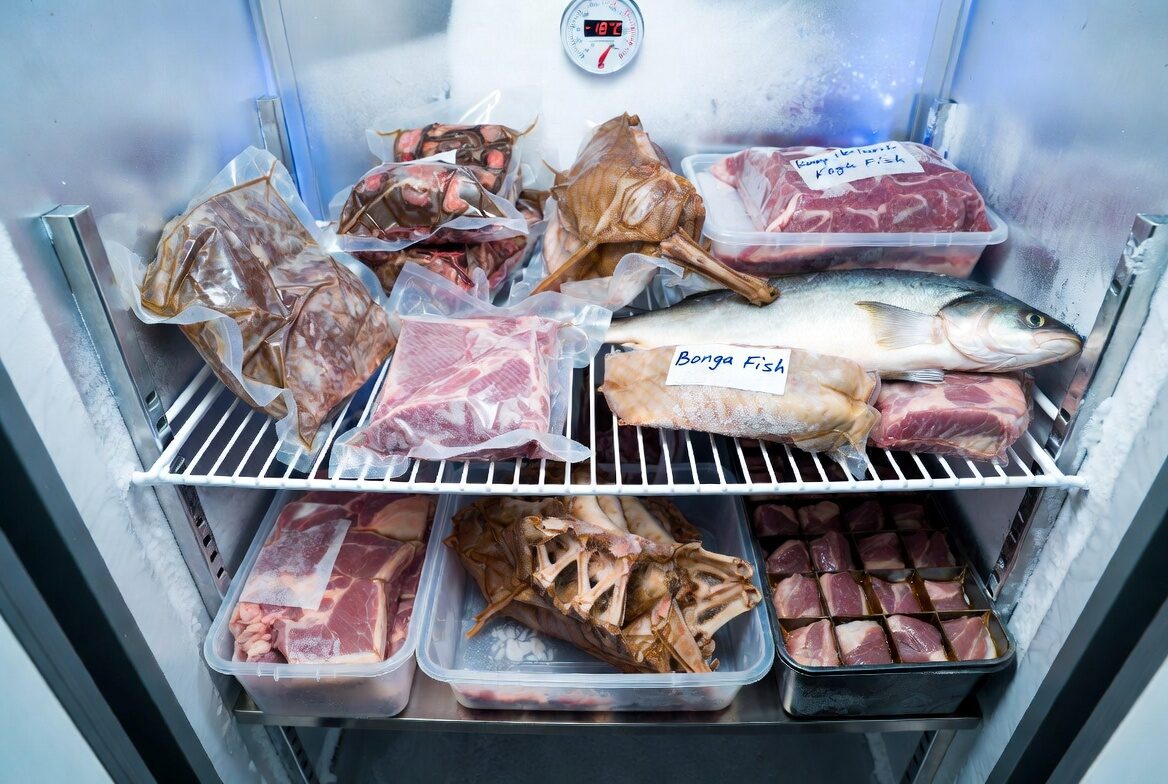
TipsMay 2026· 4 min read
How to Store Frozen African Meats for Maximum Freshness
Goat meat, cow leg, bonga fish - learn the right way to freeze, thaw and store your proteins to keep them tasting their best.
Getting your frozen meats from us is just the start. How you store and handle them at home has a huge impact on the final dish.
**Keep it at -18°C or below**
Your freezer should be set to -18°C (0°F). At this temperature, bacteria cannot grow and the meat stays safe indefinitely - though quality does degrade over time.
**Don't refreeze thawed meat**
Once meat has fully thawed in the fridge, do not refreeze it uncooked. Instead, cook it first, then you can freeze the cooked portions.
**Thaw in the fridge, not on the counter**
For food safety, move frozen meat to the fridge 12–24 hours before you plan to cook it. Thawing at room temperature allows the outer layer to enter the 'danger zone' (4–60°C) while the inside is still frozen.
**For bonga fish and dried stockfish**
These don't need to be frozen - store in a cool, dark, dry place. If they came frozen, thaw in the fridge and use within 3 days, or soak in water, clean, and cook the same day.
**Vacuum-sealing extends shelf life**
If you buy in bulk, invest in a vacuum sealer. Removing air dramatically reduces freezer burn and can extend quality from 4 months to 12+ months for red meats.
**Label everything**
Always write the date frozen on the packaging. As a guide: chicken - up to 9 months; beef/goat/lamb - up to 12 months; fish - up to 6 months.
Find the ingredients mentioned in this article:
Shop ingredients